
Why Cozy Gaming Helps Neurodivergent Parents Regulate, Connect, and Thrive (Backed by Research!)
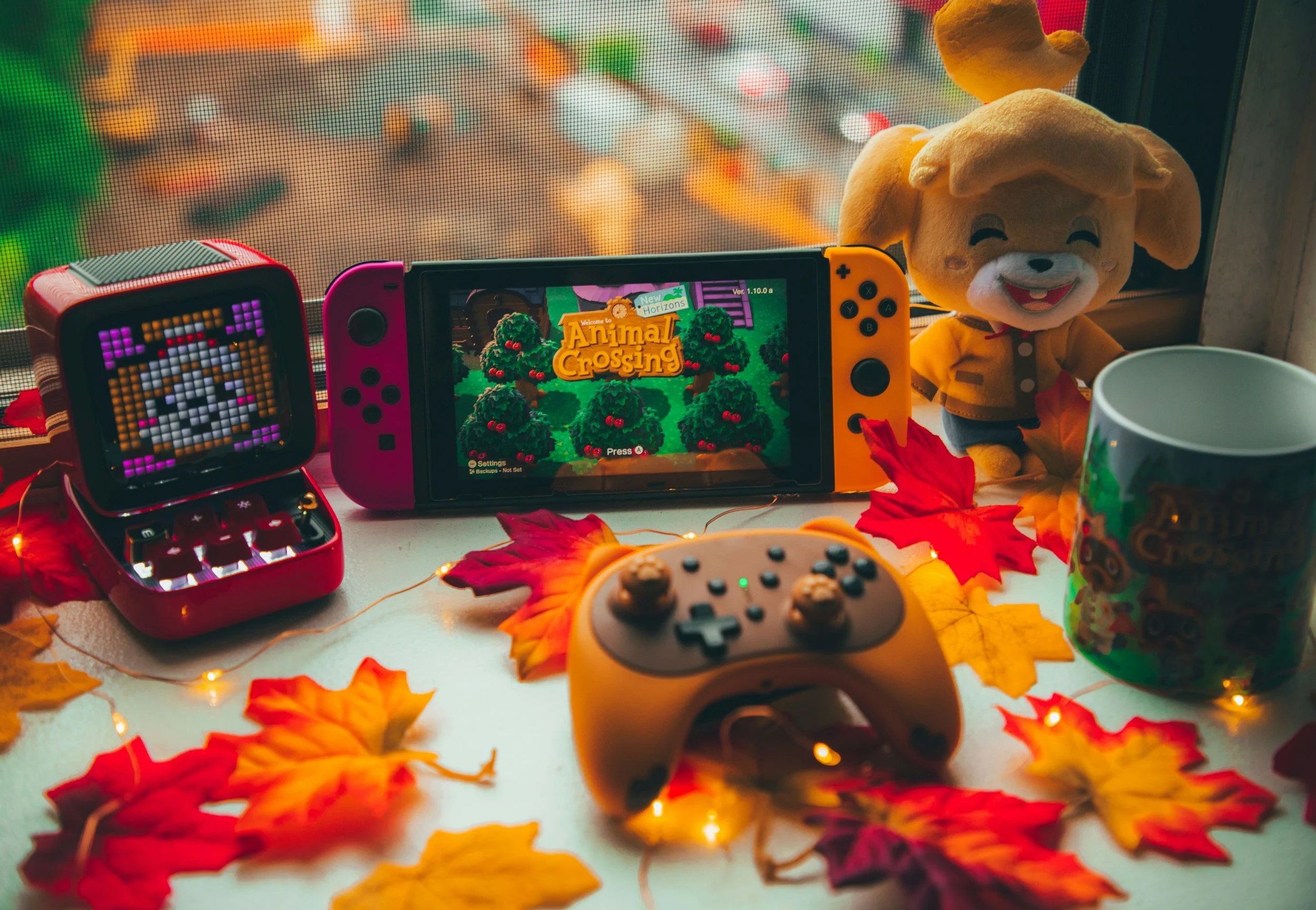
If you’re a neurodivergent parent who finds peace and calm wandering your Animal Crossing island or tending a tiny video game garden, you’re not alone. Research tells us there are mental health benefits!
Cozy gaming is emerging as one of the most accessible, low-demand regulation tools for autistic, ADHD, and AuDHD adults. And yes, there’s actual research behind why your brain feels calmer and more connected after a session of gentle, low-stakes play.
Let’s break down the science of why cozy games work so well for ND adults, especially ND parents managing sensory overload, executive dysfunction, and emotional intensity.
What Is Cozy Gaming and Why Do ND Brains Love It?
Cozy gaming refers to games that are typically low pressure, visually and auditorily soothing, and driven by routine. Some examples include Animal Crossing, Stardew Valley, Disney Dreamlight Valley, Mineko’s Night Market.
Research shows cozy games offer players “space to deal with emotional and social maintenance and growth,” supporting emotional processing and well-being.
A 2024 thesis statement found cozy games were consistently described as soothing, grounding, and essential for coping, especially for people who already struggled with stress or overload.
For neurodivergent adults who navigate sensory overwhelm, decision fatigue, and nonstop demands, cozy games feel like a regulated nervous system exhale.
The Science: Cozy Games Reduce Stress and Support Regulation
Multiple studies on casual and low-stakes games have demonstrated that they meaningfully reduce stress:
Cozy games reduce physiological stress.
Casual game sessions lower heart rate, decrease cortisol, and improve mood — sometimes as effectively as mindfulness exercises.
Non-violent games can improve anxiety and emotional well-being.
Reviews of commercial games show that low-stakes titles improve stress, anxiety, and mood without requiring specialized “therapeutic games.”
Cozy gaming functions like meditation for ND people who struggle with stillness.
Mainstream reporting has also highlighted that cozy games designed for relaxation can have calming effects similar to mindfulness.
This is especially meaningful for autistic and ADHD adults who often find traditional meditation inaccessible, overstimulating, or frustrating.
Cozy gaming gives your brain something repetitive, rhythmic, and gentle to focus on — grounding your entire nervous system.
Animal Crossing as a Mental Health Tool: What Research Found
Animal Crossing: New Horizons is one of the most heavily studied cozy games. It released in March 2020, just as the world was shutting down due to COVID-19. The research consistently finds benefits for emotional and social well-being.
In-game social interactions reduce loneliness and anxiety.
Players with more social engagement in ACNH reported lower anxiety and less loneliness, showing the game supported meaningful connection.
Cozy gaming satisfies core psychological needs.
Studies found ACNH helps fulfill autonomy, competence, and relatedness, all of which are essential building blocks of mental well-being!
ACNH was widely used as a coping tool.
Families used the game to manage stress, recreate comforting spaces, and maintain emotional stability during the pandemic.
So if your Animal Crossing island feels like a sensory-safe retreat, that’s because your brain experiences it as one.
Why Cozy Gaming in Groups Helps ND Parents Even More
Cozy gaming groups, especially for ND adults, combine the benefits of parallel play, predictable routine and structure and low-demand socializing.
Research on online gaming and social connection shows that:
Online games function as real social spaces.
We’ve seen this in games like with Minecraft and Fortnite, but the same is true for cozy games. Emotionally sensitive and socially anxious individuals build meaningful relationships through gaming communities. Because socializing demands are lower in gaming spaces, anxiety is lower when engaging in community!
Group gaming increases social well-being and reduces feelings of isolation.
Players reported that online gaming kept them connected to friends, family, and coworkers during isolating periods. They reported group gaming being more accessible during more depressive periods.
For neurodivergent parents, who often feel isolated, misunderstood, or overstimulated, cozy gaming offers a safer (and more easily accessible logistically) social environment than traditional parent groups.
Why might ND Parents, Specifically, Benefit From Cozy Gaming Groups?
I am a late-diagnosed AuDHD parent. And as one, I can testify that the world sometimes feels like a total sh*tshow. Like many of my peers, I’m frequently juggling sensory overload, parenting demands, chronic shame and executive dysfunction. Cozy gaming groups can help by offering some of the following:
A low-demand, regulation-first environment
Parallel play and gentle gameplay create natural nervous-system downshifts.
Connection without social performance pressure
You can talk — or not. Cameras are optional! Masking is minimal.
Shared validation from other ND parents
Hearing “me too” from someone who actually gets it is transformative.
Rituals that translate into real life
Many parents bring back parallel play, sensory resets, and capacity check-ins to their kids.
A sense of belonging
You don’t have to explain yourself. Everyone here already understands ND parenting realities.
So yes — cozy gaming is fun. But it’s also backed by science.
It supports:
emotional regulation
sensory regulation
stress reduction
social connection
belonging
meaning-making
resilience
And for ND parents, it offers something even more powerful: a community that matches the way their brain works.
Cozy gaming isn’t “just a game.”
It’s a research-informed tool for connection and nervous system support.
If you’ve been craving a space where you can show up exactly as you are — overstimulated, masked-out, in need of softness — cozy gaming might be exactly what your brain has been asking for.
If you’re interested in Cozy Gaming, check out my Cozy Gaming ND Parent Support Group! Click the button to learn more.
Works Cited:
Kowert R, Domahidi E, Quandt T. The relationship between online video game involvement and gaming-related friendships among emotionally sensitive individuals. Cyberpsychol Behav Soc Netw. 2014 Jul;17(7):447-53. doi: 10.1089/cyber.2013.0656. Epub 2014 Mar 24. PMID: 24660878; PMCID: PMC4080869.
Martinez, J.J., Windleharth, T.W., Li, Q., Bhattacharya, A., Pearce, K.E., Yip, J. and Lee, J.H. 2022. Joint Media Engagement in Families Playing Animal Crossing: New Horizons during the COVID-19 Pandemic. Proceedings of the ACM on Human-Computer Interaction. 6, CSCW1 (Mar. 2022), 1–22. DOI:https://doi.org/10.1145/3512947.
Russoniello, C. V., O’Brien, K., & Parks, J. M. (2009). The effectiveness of casual video games in improving mood and decreasing stress. Journal of CyberTherapy & Rehabilitation, 2(1), 53–66.
Trujillo, L. (2024). Cozy Games for Mood Repair, Stress Reduction, and Well-Being. [Master’s thesis, Utrecht University]. https://studenttheses.uu.nl/handle/20.500.12932/47430
Yee AZH, Sng JRH. Animal Crossing and COVID-19: A Qualitative Study Examining How Video Games Satisfy Basic Psychological Needs During the Pandemic. Front Psychol. 2022 Apr 1;13:800683. doi: 10.3389/fpsyg.2022.800683. PMID: 35465561; PMCID: PMC9022176.Boyd, D., & Narine, M. (2021). Families’ use of Animal Crossing: New Horizons as a coping tool during COVID-19 lockdowns. Family & Media Studies Journal, 14(2), 45–63.